A Love affair with Brutalism
“So, what are you doing these days?” I’m often asked. I’ll give a vague answer about “working on a product,” but I can feel that weird discomfort in the raw truth of the situation—the fear that I don’t sound credible. That feeling makes me reach for a justification, and I’ll quickly add, “I used to work at Ultrahuman…”
This habit of adding decoration to an uncomfortable truth has an opposite. It’s a philosophy of embracing the raw, un-decorated reality, and it has a name: Brutalism.
The term comes from architecture, where its core principle is that the structure of something is its truth. In a Brutalist building, a concrete wall is both the structure holding the building up and the surface you see and touch. There is nothing covering it. 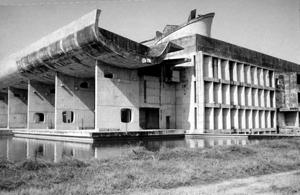 Le Corbusier’s Palace of Assembly in Chandigarh demonstrates raw concrete construction where structure becomes ornament.You can see this in Le Corbusier’s Palace of Assembly, where giant raw concrete pillars stand exposed. The rough imprints of the wooden formwork remain, so the wall you see is not an applied finish—it is the very body of the building. Function and expression collapse into one. The truth of the building lies in simply showing you how it stands.
This philosophy extends beyond buildings. In software, for example, we can see the same distinction. Some software is decorative; it prioritizes a polished surface that conceals its underlying structure. Notion is a good example. It uses icons, cover images, and templates to create a beautiful skin, but this layer of design separates the user from the raw data.
The Brutalist alternative might be an application like Obsidian. At its core, it is just markdown files in a folder; the surface is the construction. You see the raw text, the links, and the folder tree. 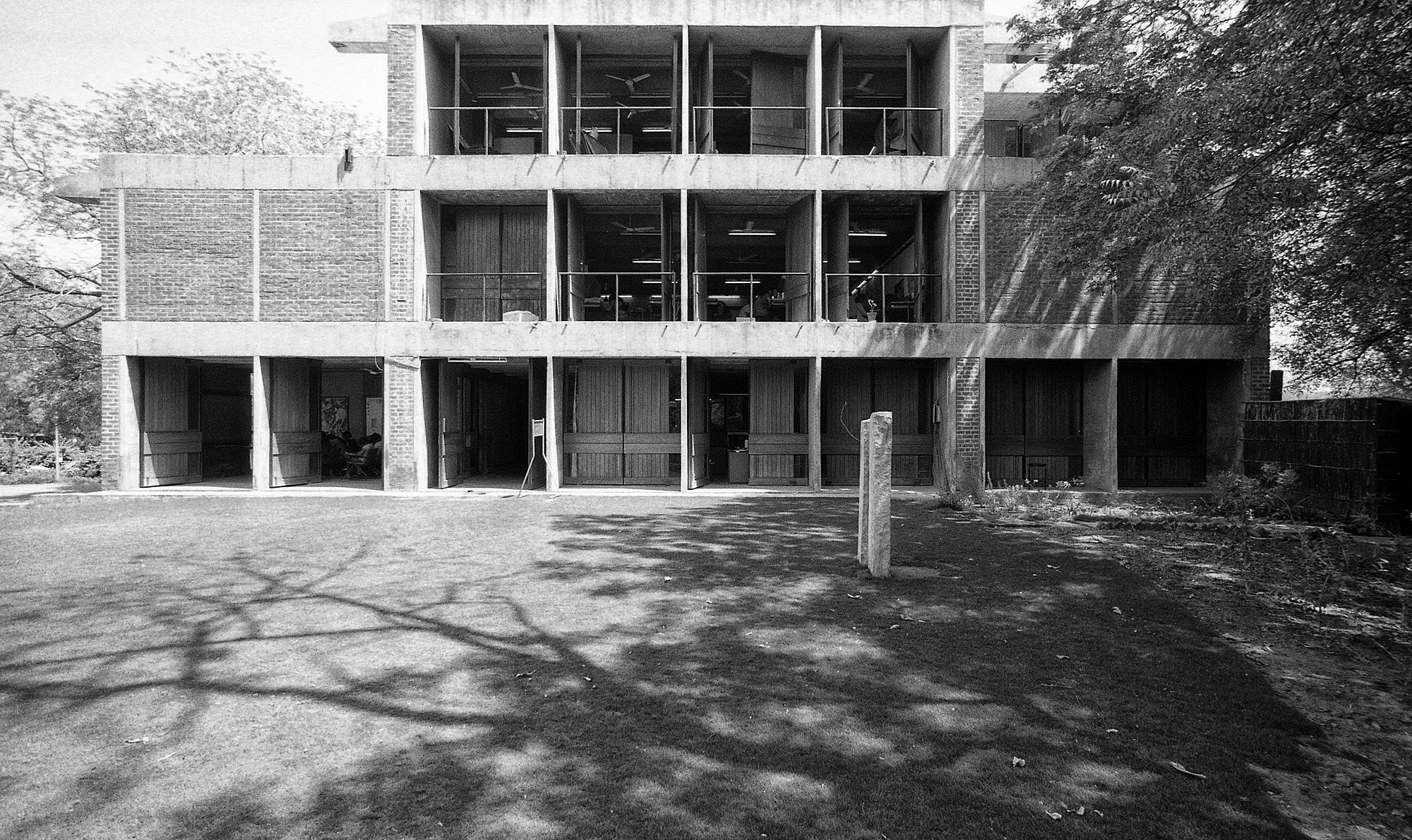 Balkrishna Doshi’s modernist approach shows how honest materials create powerful architectural statements without unnecessary decoration.It’s like the exposed concrete in a Corbusier building—you’re always reminded of the underlying construction.
This, then, is the practice of Brutalism. It is a movement away from the endless decoration of justification and toward the simple, raw fact of what is. The goal is not to perform credibility, but to embody it. Whether in a building, a piece of software, or ourselves, the purpose is simply to be. And in the honest act of being—raw, structural, and true—we enable something useful for others.